


Materials being carried by a conveyor belt can be weighed by a belt scale. Even at high volume weighing, our belt scale brands are able to ensure efficiency and accuracy.
Belt scales are built to be rugged and reliable for a variety of industries. We have experience in mining, aggregate, cement, and several other industrial industries. We also have experience in servicing a wide variety of belt scales.
Contact us so that we can help design a weighing system that meets all of your needs.
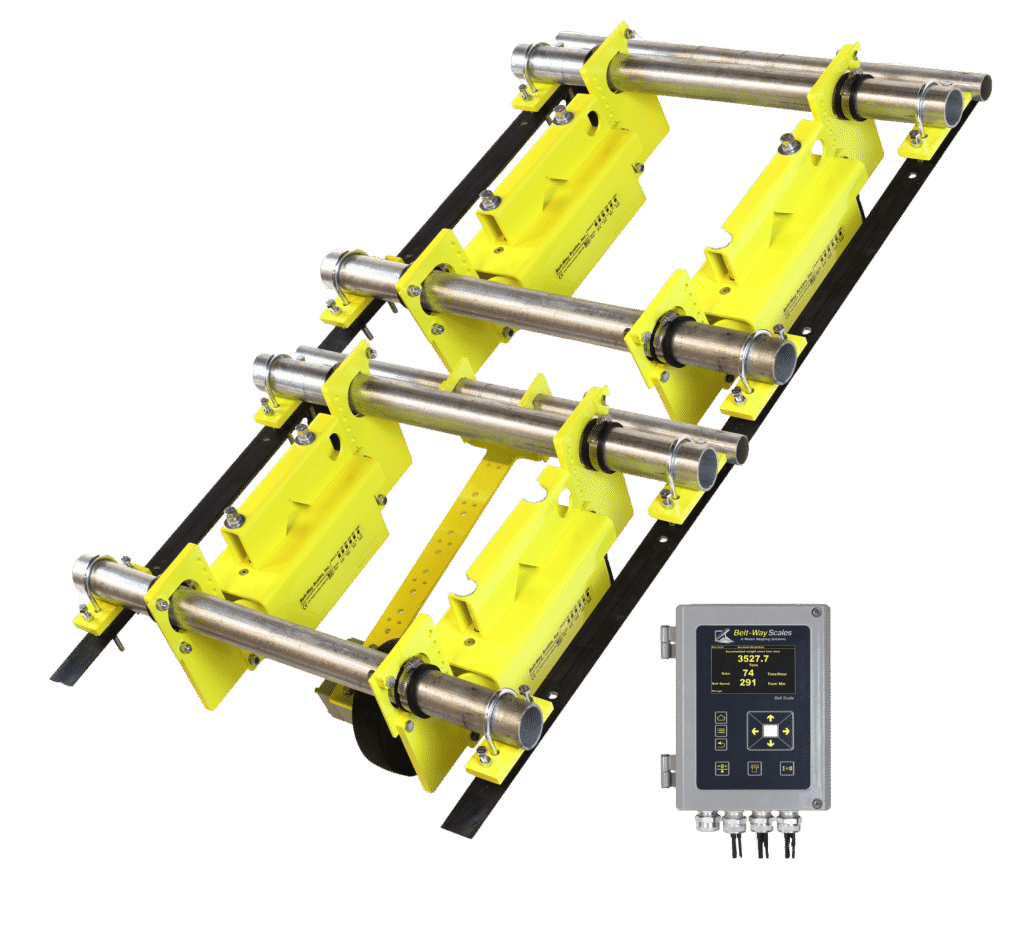
Belt scale calibration and service
A belt scale weighs material while it is moving, so its accuracy depends on more than the load cell. Belt tension, idler alignment, belt speed, and material build-up all change the reading, and small errors add up over tons per hour. Instrument Calibration Solutions (ICS), a Brechbuhler Scales company, provides calibration and verification for belt scales, with digital certificates available 24x7 through ScaleSuite.
What we check on a belt scale
- Zero checks with the belt empty and running, to catch drift and build-up on the weigh idlers
- Span checks using certified test weights or a calibration chain or roller, where the installation supports it
- Belt speed sensor and the integrator or controller settings
- Idler alignment, belt tracking and belt tension around the weigh section
- Load cell, mounting and cable condition
- Material tests that compare belt scale totals to an independent weight of the same material, when your process calls for it
Why belt scale checks are different
Unlike a truck or floor scale, a belt scale cannot be tested by simply setting a weight on a platform. Its accuracy is tied to how the belt runs and how the material loads it. Check results can change with belt condition, temperature and material. A useful calibration looks at the whole conveyor section, not just the electronics.
Legal-for-trade belt scales
Belt-conveyor scale systems used in trade are covered by NIST Handbook 44 and your state weights and measures program. If your belt scale is used to bill customers or settle a contract, tell us so we can plan the verification around those requirements. A calibration certificate documents performance but does not replace a state inspection or registration where one is required.
Signs your belt scale needs attention
- Totals do not agree with truck scale weights or inventory
- Zero drifts between checks
- Material is building up on the idlers or belt
- The belt has been replaced, re-spliced or re-tracked
- The conveyor was rebuilt, moved or had idlers changed
Belt scale calibration FAQs
How often should a belt scale be checked?
Many operations check zero frequently and verify accuracy at least once a year. Changes to the conveyor, belt or material, or totals that no longer agree with other weights, call for an earlier check.
What is a material test?
Material that has passed over the belt scale is weighed independently, often on a truck scale, and compared to the belt scale total. It shows how the scale performs with your actual material.
Can you calibrate a belt scale while the conveyor is running?
Some checks require the belt to run empty and others need it to run with material. We plan the visit around your conveyor schedule. Contact us with the make and model of the scale and integrator.
Which belt scale brands do you work on?
We work with a wide range of belt scale brands, including the manufacturers listed on this page. Call us with your make and model to confirm.
Where can I find my belt scale certificates?
Certificates are available online at any time through ScaleSuite.
Need calibration across several types of scales? See our scale and balance calibration page, or our loader scales and batching and filling systems.
You Name It, We Know It
Brands we work with




Are you ready to get started?
OUR MOTTO: TAKE CARE OF THE CUSTOMER