

What’s the Difference Between ISO 17025 Accredited Calibration and NIST Traceable Calibration in Cleveland’s Scrap, Steel, and Recycling Industries?
ISO 17025 vs NIST calibration is a common question for Cleveland’s scrap, steel, and recycling operations. 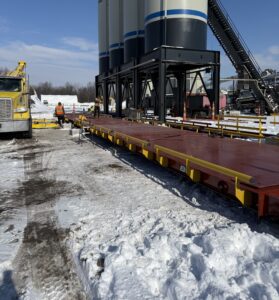
In Cleveland’s industrial industry, where scrap yards, steel processors, recycling facilities, and landfills operate daily, accurate weighing isn’t optional. It directly impacts revenue, compliance, and customer trust.
Truck scales are at the center of these operations. Whether you’re weighing inbound scrap metal, outgoing steel loads, or landfill tonnage, even small inaccuracies can lead to major financial discrepancies.
That’s why calibration matters.
A common question we hear from operations managers and scale owners across Northeast Ohio is: What is the difference between ISO 17025 accredited calibration and NIST traceable calibration. And which one do I actually need?
While both options provide traceability, they are not the same. Choosing the right level of calibration can affect everything from audit readiness to profitability.
At Brechbuhler Scales, we work with scrap yards, steel facilities, and waste operations across Cleveland to ensure their truck scales are accurate, compliant, and defensible.
Understanding NIST Traceable Calibration in Industrial Operations
A NIST traceable calibration means your scale is calibrated using standards that trace back to the National Institute of Standards and Technology (NIST).
In practical terms for a scrap yard or landfill:
- Your scale is checked against certified weights
- Those weights are part of a documented chain back to national standards
- Your measurements are aligned with industry-recognized benchmarks
However, NIST traceable only calibration focuses on the equipment, not the calibration process itself.
There is no independent verification of:
- The technician’s procedures
- The lab’s quality system
- Measurement uncertainty calculations
For many Cleveland-area operations, this level of calibration is sufficient for:
- Internal load tracking
- Basic operational checks
- Non-regulated transactions
For example, a small scrap operation tracking internal material flow may only need NIST traceable calibration to maintain consistency.
What Is ISO/IEC 17025 Accredited Calibration. And Why It Matters for Scrap, Steel, and Landfills
ISO/IEC 17025 accredited calibration goes a step further.
It doesn’t just verify the tools. It verifies the entire calibration process and the competence of the laboratory performing it.
For industries like:
- Scrap metal recycling
- Steel production and processing
- Landfills and waste management
This level of calibration can be critical.
ISO 17025 accredited calibration ensures:
- The lab is independently audited
- Calibration procedures follow strict, documented standards
- Technicians are properly trained and qualified
- Equipment is maintained and validated
- Measurement uncertainty is calculated and reported
In real-world terms, this means your scale data can stand up to:
- Customer disputes
- Regulatory inspections
- Legal-for-trade requirements
If you’re buying and selling material by weight, as most scrap and steel operations do, this matters.
Why Measurement Uncertainty Is a Big Deal in High-Volume Weighing
In industries like scrap and steel, small inaccuracies scale quickly.
If your truck scale is off by even a small margin:
- You could be underpaying suppliers
- Overcharging customers
- Losing revenue across hundreds of loads
ISO 17025 accredited calibration includes measurement uncertainty analysis, which tells you how precise your scale really is.
That added transparency gives operations managers confidence that their numbers are defensible, especially during audits or disputes.
ISO 17025 vs NIST Traceable: What’s the Real Difference for Cleveland Operations?
NIST Traceable Only Calibration
- Traceable to national standards
- No independent lab verification
- May not include uncertainty analysis
- Lower documentation requirements
- Best for basic operational needs
ISO 17025 Accredited Calibration
- Traceable to NIST standards
- Independently audited laboratory
- Includes full uncertainty analysis
- Strict procedures and documentation
- Provides accredited calibration certificates
The key difference comes down to risk and accountability.
If your scale directly impacts revenue, compliance, or customer billing, ISO 17025 offers a higher level of protection.
Why This Matters for Truck Scales in Scrap Yards, Steel Plants, and Landfills
Truck scales are the financial backbone of many Cleveland industries.
They determine:
- How much scrap is purchased
- How much steel is shipped
- How landfill usage is billed
Inaccurate scales can lead to:
- Lost revenue
- Compliance issues
- Customer disputes
- Failed audits
For operations dealing with high volumes and tight margins, even small errors add up fast.
That’s why many scrap, steel, and waste companies choose ISO 17025 accredited calibration, to ensure their numbers are accurate and defensible.
Choosing the Right Calibration for Your Operation
The right calibration depends on how your scale is used.
You may only need NIST traceable calibration if:
- You’re tracking internal weights
- You’re not in a regulated environment
- Your scale does not directly impact billing
You should consider ISO 17025 accredited calibration if:
- You buy or sell material by weight
- You operate in a regulated or audited environment
- You need defensible data for customers or compliance
- You want full confidence in measurement accuracy
Calibration Services for Cleveland’s Industrial Operations
Brechbuhler Scales supports scrap yards, steel processors, recycling facilities, and landfills across Cleveland and Northeast Ohio.
We understand the demands of:
- High-capacity truck scales
- Heavy-use environments
- Compliance-driven industries
Whether you need ISO 17025 accredited calibration or NIST traceable calibration, our team helps ensure your weighing systems perform accurately, day in and day out.
Quick Summary: ISO 17025 vs NIST Calibration
- NIST traceable calibration ensures your scale is aligned with national standards but does not verify the calibration process itself
- ISO 17025 accredited calibration adds independent auditing, strict procedures, and measurement uncertainty analysis
- Cleveland industries like scrap, steel, and waste often benefit from ISO 17025 due to revenue impact and compliance requirements
Final Thoughts
In Cleveland’s industrial environment, your truck scale isn’t just equipment. It’s a critical part of your operation’s financial accuracy.
Understanding the difference between ISO 17025 vs NIST traceable calibration helps you choose the right level of confidence, documentation, and protection for your business.
If your operation depends on accurate weights, and most do, this decision matters.
Which Calibration Do You Need?
Understanding ISO 17025 vs NIST calibration helps you choose the right documentation for your industry. Contact us with questions, or learn about our calibration services. Both standards trace back to the NIST Office of Weights and Measures.