


Why Choose a Brechbuhler Preventative Maintenance Plan
Before you decide what plan is right for you, contact one of our representatives for a free consultation. Application, usage, environment, and other variables all play a role in determining the correct preventative maintenance plan.

Manufacturer Relationships
We have a direct relationship with the manufacturer of B-TEK products. Additionally, we have long lasting relationships with our other key suppliers. Bottom line: we have parts, we get answers, and we solve issues promptly.
Certified Technicians
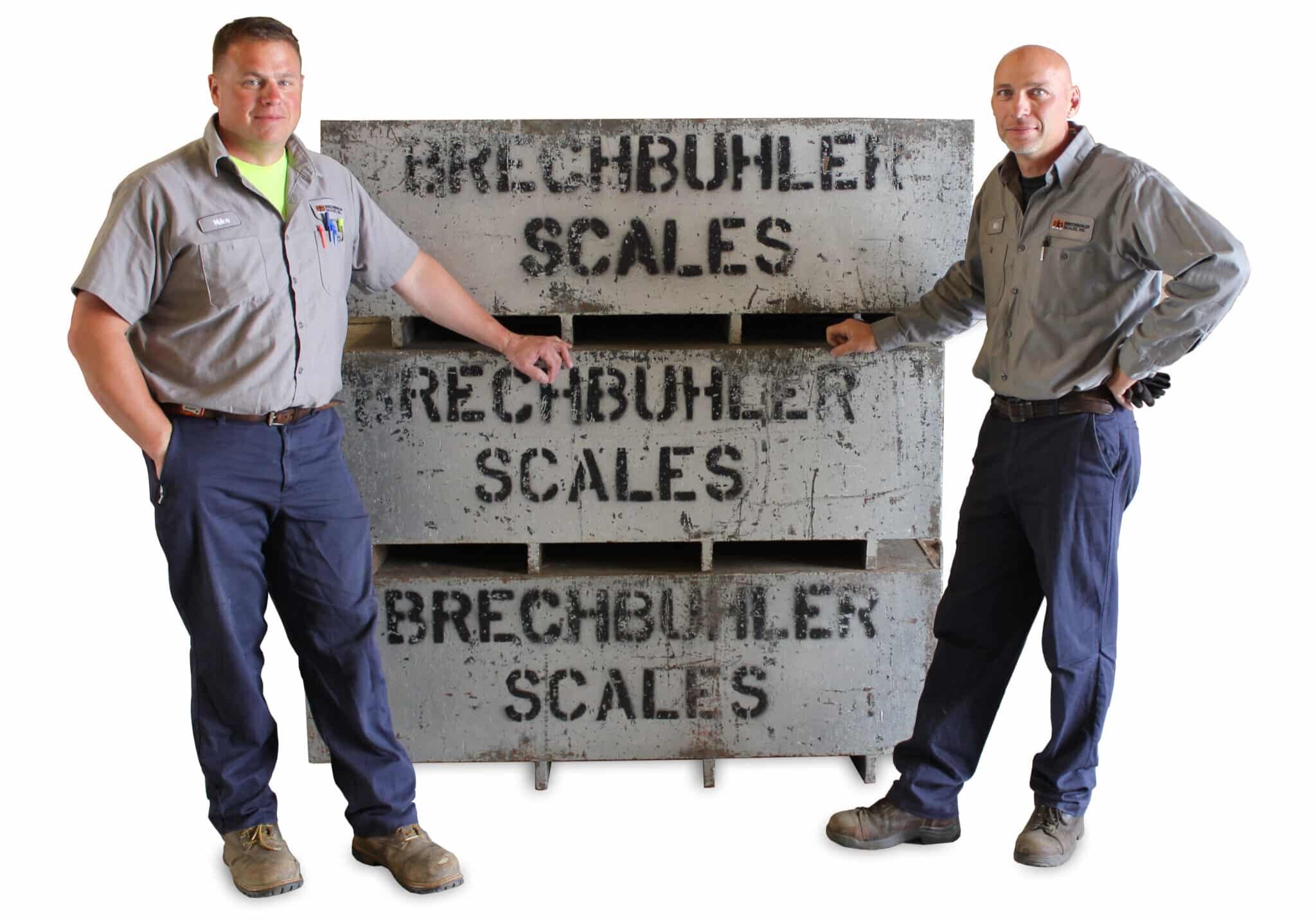
Our technicians are ISO/IEC 17025 certified to deliver an unmatched experience when it comes to scale service. In addition, our Field Service Technicians are professionally trained throughout their careers in our training & development program.
ScaleSuite
ScaleSuite is our digital certification software that our technicians use to capture calibration data. Calibration certs are available 24 x 7 through a secure website making audits and finding information a simple task.
Watch: calibration and maintenance guides
Two longer videos from the Brechbuhler Scales team on ISO/IEC 17025 calibration and on keeping industrial scales in good working order.
Ultimate Guide to ISO/IEC 17025 Truck Scale Calibration
A 14-minute guide to what ISO/IEC 17025 calibration of a truck scale involves.
Industrial Scale Maintenance Checklist: Calibration & Care Guide
A 10-minute checklist for calibrating and caring for industrial scales.
What we calibrate
Brechbuhler Scales calibrates and services industrial scales and balances of every type we sell, and each one is tested the way it is actually used.
Vehicle scales
Truck scales, rail scales, axle scales and wheel weighers carry heavy, changing loads, often outdoors. Calibration checks accuracy across the capacity range and section (shift) response, so a weak load cell or a damaged junction box does not go unnoticed.
Platform scales
Floor scales, bench scales, counting scales and livestock scales are checked for corner (shift) loading, repeatability and accuracy at several points, from small weights up to full capacity. Receiving docks, shipping stations and parts counting all depend on these results.
Precision balances and check weighing
Balances, check weighing systems and intrinsically safe scales are tested for repeatability, eccentricity (off-center loading), linearity and sensitivity. Drafts, vibration and temperature change what a balance reads, so the environment is part of the calibration.
Hanging scales
Crane scales, dynamometers and monorail scales are checked under load, because a hanging scale that reads wrong is both a quality problem and a safety problem.
In-motion weighing
Belt scales, batching and filling systems, loader scales and loadout systems weigh material while it moves, so they are calibrated and verified against known references and checked for drift over time.
What a scale calibration checks
A calibration compares what the scale reads against known reference weights at several points across its range. It typically covers accuracy across capacity, repeatability, corner or shift loading, linearity and return to zero. If the scale is out of tolerance, it can be adjusted, and the results are recorded on a calibration certificate.
Legal-for-trade vs. internal calibration
Scales used to buy or sell by weight are legal for trade and are governed by NIST Handbook 44, which most states adopt. These scales are normally inspected and sealed by the state or local weights and measures office. A service calibration shows how accurate your scale is and keeps it ready for inspection, but it does not replace the official inspection. Scales used only inside your plant, such as process, batching or quality control scales, are not inspected, but your quality system usually still requires them to be calibrated on a schedule.
Scale and balance calibration FAQs
How often should an industrial scale be calibrated?
Many facilities calibrate annually. Heavily used scales, scales outdoors or in harsh environments, and critical measurements should be calibrated more often. Your quality system and your state weights and measures office may set requirements.
What is the difference between calibration and verification?
Verification checks whether a scale reads within tolerance. Calibration also adjusts the scale when it does not, then documents the results.
Do you calibrate on-site?
Yes. Most industrial scales are installed in place, so our technicians come to you. We can also review balances and portable scales with you.
What test weights are used?
Test weights are classed by accuracy, for example under ASTM E617 and OIML classes, and the class used should suit the tolerance of the scale being tested.
Can you help with laboratory and pharmaceutical balance requirements?
Regulated laboratories often follow USP chapters <41> and <1251> for balance performance. Tell us which requirements apply to you and we will build the calibration around them.
How do I get calibration certificates for an audit?
Our technicians capture calibration data in ScaleSuite, our digital certification software. Calibration certificates are available 24 x 7 through a secure website, which makes audits and finding information simple.
What does ISO/IEC 17025 certified mean for your technicians?
Our technicians are ISO/IEC 17025 certified to deliver an unmatched experience when it comes to scale service. Our certificate and scope are linked in the footer of this page.
What does a preventative maintenance plan include?
Application, usage, environment and other variables all play a role in the right plan. Contact one of our representatives for a free consultation, and our salesman or service manager will meet you on-site to develop a quality control plan.
Related calibration services
Load cells and force measuring devices are covered in our force measurement and calibration. For meters, indicators and other instruments, see our electrical calibration, temperature and humidity calibration and pressure calibration, performed by Instrument Calibration Solutions (ICS), a Brechbuhler Scales company.
OUR MOTTO: TAKE CARE OF THE CUSTOMER