


Installation and calibration of onboard weighing equipment can be a tricky application. Attention needs to be paid to all moving parts and potential usage of the equipment.
Earthmovers and bucket loading trucks can be outfitted with weighing technology to give better insight into the load and decrease chances of over/under loading.
Contact us to let our scale experts match you with the solution you need!
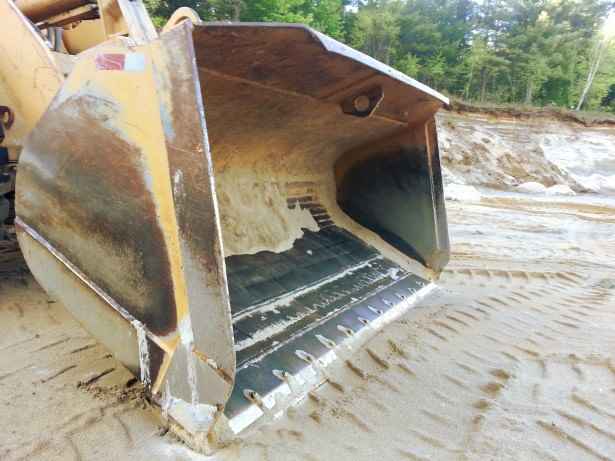
Loader scale calibration and service
B-TEK on-board loader scales help you load trucks and railcars to the correct weight on the first pass, cutting down on re-handling, overloads, and shipping claims. Regular calibration keeps those readings accurate as buckets, forks, and hydraulic systems wear, so your loadout numbers hold up whether you're weighing in the yard or feeding data straight into your ticketing system.
What we check on a loader scale
Our technicians inspect load cells, indicator calibration, and the mounting hardware that connects the scale to your loader's bucket or forks. We test accuracy across the load range with certified test weights and verify that the system holds calibration through a full lift-and-dump cycle, not just at rest.
On-board weighing ROI
An accurate on-board loader scale pays for itself by reducing overloaded trucks, minimizing product giveaway, and cutting the claims and fines that come with inaccurate loads. A properly calibrated system also speeds up loadout, since operators can trust the in-cab readout instead of stopping for a separate weigh.
Truck ticketing integration
Many of our loader scale customers tie their on-board system into truck ticketing or inventory software so load weights are captured automatically as trucks are filled. We can help make sure your scale's calibration and data output are dialed in to support that kind of integration reliably.
Loader scale calibration FAQs
How often should a loader scale be calibrated?
Most loader scales should be checked and calibrated at least once or twice a year, though high-cycle operations may need more frequent service to keep up with wear on the bucket or forks.
Can a loader scale be used for legal-for-trade weighing?
Some loader scale configurations can be certified for legal-for-trade use depending on the application; we can help you determine what's required and whether your setup qualifies.
Why does my loader scale read differently depending on lift speed or angle?
Dynamic weighing is sensitive to lift speed, bucket angle, and hydraulic pressure changes. Our calibration process accounts for these factors so your readings stay consistent during normal loading motion.
Do you service loader scales outside of Ohio?
Yes, our technicians travel to service loader scales and other equipment across a wide service area beyond Ohio. Contact us with your location and we'll let you know how we can help.
OUR MOTTO: TAKE CARE OF THE CUSTOMER